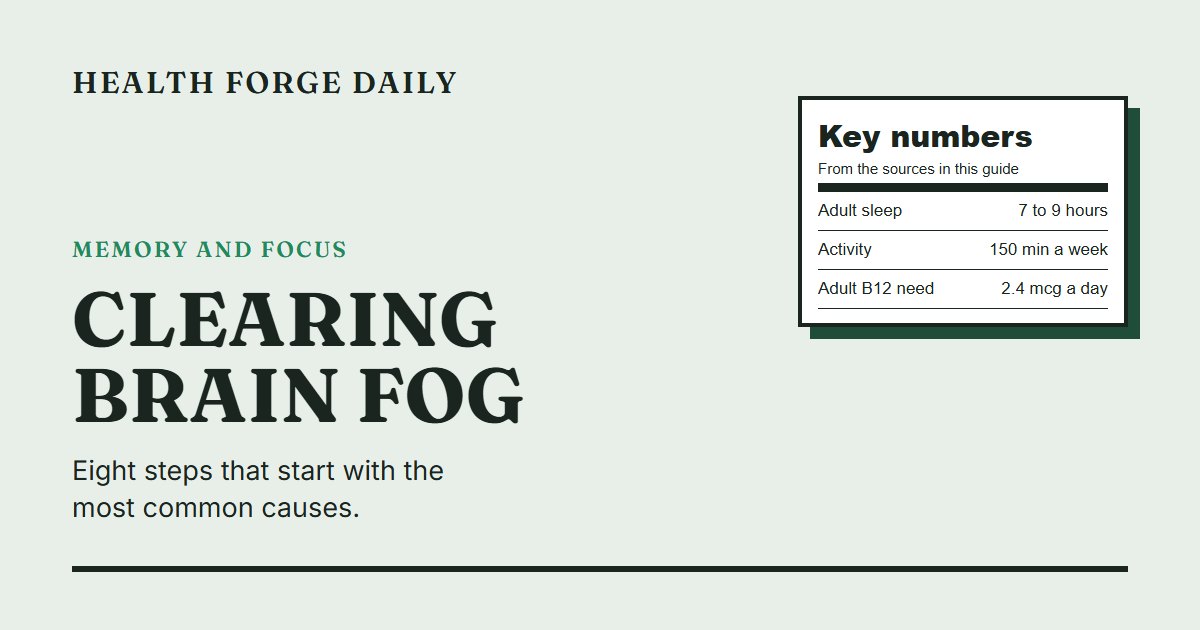
Brain fog is a symptom, not a diagnosis, so getting rid of it means finding the cause. Start with 7 to 9 hours of sleep, less alcohol, regular meals and 150 minutes of activity a week. If the fog lasts, ask a doctor to check for sleep apnea, depression, thyroid problems, low vitamin B12, blood sugar swings and medicine side effects.
How to get rid of brain fog comes down to finding what is clouding your thinking, because brain fog is a symptom with many causes. We read the National Institute on Aging page on memory problems, NIH pages on sleep, mood, thyroid and blood sugar, a 2023 study of 717 brain fog posts and three larger studies, using our review process.[1][2]
The short answer: sleep 7 to 9 hours, limit alcohol, move most days, and ask a doctor to check thyroid, vitamin B12 and blood sugar if the fog lasts.[4][2][20] We found no trial showing that a supplement clears brain fog on its own.
| What it is | An everyday name for slow, fuzzy or forgetful thinking, not a medical diagnosis[1] |
|---|---|
| What it feels like | Forgetfulness, trouble concentrating, feeling detached, thinking that takes extra effort[1] |
| Common causes | Poor sleep, depression or anxiety, medicine side effects, alcohol, thyroid problems, low vitamin B12[2] |
| Sleep target | 7 to 9 hours a night for adults[4] |
| Activity target | 150 to 300 minutes of moderate activity a week[20] |
| Supplements | Most studies find low B12 levels do not change the risk of cognitive decline in older adults; test before you take it[10] |
| See a doctor soon if | You get lost in familiar places or grow more confused about time, people and places[2] |

What is brain fog and what does it feel like?
Brain fog is an informal name for thinking that feels slow, fuzzy or forgetful, and it is a symptom rather than a diagnosis. A 2023 study of 717 Reddit posts found people use the phrase for forgetfulness, trouble concentrating, feeling detached from their surroundings and thinking that takes extra effort.[1]
In the 141 posts where people described the feeling in their own words, forgetfulness came up 51 times and difficulty concentrating 43 times. Feeling detached or unreal came up 34 times, slow and effortful thinking 26 times, and trouble communicating 22 times. A sense of fuzziness or pressure (10) and fatigue (9) were less common.[1]
The posts tied brain fog to many illnesses, drugs and habits. The cause people named most often was long COVID, in 60 of 570 posts, or about 10%.[1] The authors concluded the term covers quite different experiences, which is why the fix depends on the cause.
Some forgetfulness is also a normal part of aging, such as misplacing things now and then or taking longer to learn something new.[2] Our guide to habits that help improve memory covers that side.
What causes brain fog?
The most common causes of brain fog are poor sleep, depression or anxiety, medicine side effects, alcohol or drug use, thyroid problems and low vitamin B12. The National Institute on Aging lists all of these as causes of memory problems, and says such problems usually go away once the condition is treated.[2]
| If you also notice | Possible cause to ask about |
|---|---|
| Loud snoring, gasping at night, daytime sleepiness | Sleep apnea[5] |
| Low mood, poor sleep and appetite changes for weeks | Depression[6] |
| Hard-to-control worry on most days for 6 months | Generalized anxiety disorder[7] |
| Fatigue and low mood that creep in slowly | Underactive thyroid[8][9] |
| Numb or tingly hands and feet, poor balance | Low vitamin B12[10] |
| Shaky, dizzy or confused while using insulin or diabetes pills | Low blood sugar[11] |
| Hot flashes and night sweats in midlife | Menopause transition[12] |
| Fatigue that started after COVID-19 | Long COVID[14] |
Medicines matter too. The NIA lists side effects as a cause, and the Office of Dietary Supplements notes that metformin and acid reducers such as omeprazole can lower vitamin B12.[2][10] Never stop a prescribed medicine on your own.
What the studies on brain fog found
Research on brain fog itself is thin. Most studies look at one condition, such as menopause, long COVID or thyroid disease, and measure memory or attention inside that group. We found these four the most useful.
| Study | Who and how many | How long | Main finding |
|---|---|---|---|
| McWhirter et al., 2023 | 717 Reddit posts | Posts from one week in 2021 | Brain fog covers many experiences; long COVID was the top named cause, at 10%[1] |
| SWAN, Greendale et al., 2009 | 2,362 midlife women | 4 years | Learning gains stalled in late perimenopause and returned after menopause[13] |
| RECOVER, Thaweethai et al., 2023 | 9,764 adults | 6 months and longer | Brain fog was one of 12 symptoms that define long COVID[15] |
| Samuels and Bernstein, 2022 | Review of published studies | Not a trial | Thyroid-related brain fog is poorly defined and often starts before diagnosis[9] |
How to get rid of brain fog naturally
To clear brain fog naturally, fix the habits that most often cause it: sleep, alcohol, activity, stress and regular meals. These steps are safe for most people and follow NIH advice. If the fog has not lifted after a couple of weeks of steady effort, the cause may be medical and is worth a checkup.[2][4][20]
Try the steps together. Poor sleep, worry and drinking often feed each other, so fixing one alone may not be enough. A short diary of sleep, drinks, meals and foggy hours shows what changed and gives your doctor something concrete to work with.
Eight steps to try for two weeks
- Protect 7 to 9 hours of sleep. Short sleep can make it hard to learn, focus and react.[3][4] Our steps to fall asleep fast help if bedtime is the problem.
- Limit alcohol. The NIA advises avoiding or limiting it, and a hangover impairs attention and decision-making.[2][16]
- Move most days. Adults need 150 to 300 minutes of moderate activity a week, and activity can ease anxiety and improve sleep.[20]
- Eat regular meals. Skipped meals and low blood sugar are listed migraine triggers, and low blood sugar can cause confusion.[18][11]
- Get help for worry or low mood. Cognitive behavioral therapy is the best studied talk therapy for anxiety.[7]
- List every medicine and supplement and ask a pharmacist whether any could dull your thinking.[2]
- Keep a diary. NINDS suggests logging sleep, food, drinks and stress for migraine, and the same log works here.[18]
- Get blood work if it lasts. Ask about thyroid, vitamin B12 and blood sugar tests.[8][10][11]
How do you get rid of brain fog fast?
No source we read offers a way to clear brain fog instantly, because the right fix depends on the cause. One cause does respond in minutes: low blood sugar in people with diabetes. Hangover fog has no quick fix, and thyroid treatment is checked with a blood test about 6 to 8 weeks after starting.[11][16][8]
If you use insulin or certain diabetes pills and feel foggy, check your glucose. NIDDK advises that below 70 mg/dL you take 15 to 20 grams of glucose, such as four glucose tablets, wait 15 minutes and check again.[11]
For a foggy afternoon without a medical cause, the safest quick moves are a brisk walk and a real meal. Physical activity has immediate benefits, including lower anxiety and better sleep that night.[20]
If you are weighing a focus supplement, read what L-theanine trials show for stress and focus first, and keep expectations modest.
How to get rid of brain fog and fatigue
When brain fog comes with fatigue, the usual suspects are sleep apnea, an underactive thyroid, low vitamin B12, depression and long COVID. Each can cause tiredness and slow thinking together, and each has a test or treatment. A doctor can usually sort them out with questions, an exam and blood tests.[5][8][10][6][14]
Sleep apnea causes daytime sleepiness that can lead to problems with learning, focusing and reacting. Loud snoring and gasping are clues, and you may need a sleep study.[5] If you wake up foggy after a full night in bed, ask about it.
Nearly 5 in 100 Americans aged 12 and older have hypothyroidism.[8] A 2022 review described its brain fog as fatigue, low mood and trouble with memory and planning, often starting before diagnosis.[9]
Vitamin B12 deficiency affects 3% to 43% of older adults and can cause confusion and poor memory along with tiredness.[10] Our page on vitamin B12 deficiency symptoms and testing explains who is at risk.
Long COVID and POTS
Fatigue, brain fog and post-exertional malaise are among the most reported long COVID symptoms, and the CDC counts more than 200 in all.[14] In the NIH RECOVER study of 9,764 adults, brain fog was one of 12 symptoms used to define the condition. About 10% of people first infected from December 2021 onward met that definition at 6 months.[15]
Some people develop POTS after a viral illness. It causes a fast heart rate on standing, and NINDS calls brain fog a major feature. More fluids, more salt and compression garments can help, and drinking at least 16 ounces of water before getting up gives a short boost.[19] Ask a doctor before adding salt if you have high blood pressure.
How long does brain fog last after drinking, weed or a migraine?
Brain fog from alcohol, cannabis or a migraine usually fades as the trigger wears off, though the timing differs. Hangover symptoms can last 24 hours or longer, and the tired, confused phase after a migraine can last up to two days. Frequent, heavy cannabis use is tied to longer-lasting thinking problems.[16][18][17]
For a hangover, NIAAA says no remedy has been scientifically proven and only time helps while the body clears alcohol byproducts and rehydrates. Attention and decision-making stay impaired during that time, so skip driving.[16]
Cannabis can impair thinking and memory while you are high. Frequent or heavy use has been linked to problems with learning, memory, attention and processing speed, so cutting back is the main step.[17]
After a migraine, people are usually exhausted or confused for a while, and some have trouble concentrating between attacks. Too much or too little sleep, skipped meals and alcohol are common triggers, and a doctor can help with prevention.[18]
How to get rid of brain fog in perimenopause and menopause?
Menopause brain fog is real and, for many women, temporary. In the SWAN study, which followed 2,362 women for 4 years, learning scores stopped improving in late perimenopause and returned to earlier levels after menopause. The authors said these thinking problems may be time-limited.[13]
The NIA lists forgetfulness and difficulty concentrating among menopause transition symptoms, along with hot flashes, night sweats and trouble sleeping.[12] Broken sleep on its own can make it hard to focus.[3]
SWAN also found that hormone therapy started before the final period was linked to better test scores, while starting it after was linked to worse ones.[13] That comes from one observational study, so make the hormone decision with a doctor. The NIA advises asking about lifestyle changes or medicines that might help.[12]
When should you see a doctor about brain fog?
See a doctor if brain fog does not lift after you fix sleep and alcohol, if it is getting worse, or if it makes everyday tasks hard. Many causes, such as thyroid problems, depression and low vitamin B12, can be found with simple checks, and memory problems from treatable conditions usually go away once they are treated.[2]
Bring your diary and a full list of medicines and supplements to the visit. Say when the fog started, what makes it better or worse, and whether snoring, low mood, hot flashes or a recent infection came with it. That history points the doctor toward the right tests.
See a doctor right away if
Some signs point to something more serious than ordinary fog. Get prompt care for any of these, and call 911 for sudden confusion or trouble speaking.
- You ask the same questions over and over.[2]
- You get lost in places you used to know well.[2]
- You have trouble following recipes or directions.[2]
- You are more confused about time, people and places.[2]
- You use insulin and cannot see or speak clearly, a sign of very low blood sugar.[11]
- You have thoughts of suicide. Call or text 988.[6]
What doctors check first
A doctor usually starts with your history, sleep, mood, alcohol use and medicine list. Blood tests can check thyroid hormones, vitamin B12 and glucose, and loud snoring may lead to a sleep study.[8][10][5]
Treatment follows the cause. Hypothyroidism is treated with levothyroxine, with a recheck about 6 to 8 weeks after starting.[8] Antidepressants usually take 4 to 8 weeks, and problems with sleep and concentration often improve before mood lifts.[6] For anxiety, cognitive behavioral therapy is the gold standard talk therapy.[7]
Are supplements safe for brain fog?
Adults need 2.4 mcg of vitamin B12 a day, and a deficiency can cause confusion and poor memory.[10] Even so, most studies find low B12 levels do not change the risk of cognitive decline in older people, so a test makes more sense than guessing.[10] People who take metformin or acid reducers, older adults and vegans are among the groups at higher risk of running low.[10]
If you are pregnant, take prescription medicine or have a long-term condition, ask your doctor before starting any supplement. More guides on memory and focus cover individual ingredients.
What should you do first about brain fog?
Start with two weeks of steady sleep, little or no alcohol and daily movement, and keep a short diary while you do it. If the fog has not lifted, take the diary to a doctor and ask for the basic blood tests. This order covers the most common causes first.[2][4][20]
- Allow 7 to 9 hours for sleep every night.[4]
- Limit alcohol, and skip it on nights before demanding days.[2]
- Build toward 150 minutes of moderate activity a week.[20]
- Eat regular meals, and check glucose if you use insulin.[11]
- Write down every medicine and supplement you take.[2]
- Note snoring, low mood or constant worry, and mention them.[5][6][7]
- Ask about thyroid, B12 and glucose tests if the fog lasts.[8][10][11]
Bottom line
Brain fog has many possible causes, and the common ones are easy to check. For most people, fixing sleep is a better first step than buying a focus supplement, because short sleep directly harms learning and focus and costs nothing to change.[3]
If two weeks of better habits do not help, the next step is a doctor visit. Thyroid problems, low B12, sleep apnea and depression are all common enough to check, and all are treatable once found.[8][10][5][6]
Sources
- What is brain fog?. McWhirter et al., Journal of Neurology, Neurosurgery and Psychiatry, 2023
- Memory Problems, Forgetfulness, and Aging. National Institute on Aging
- What Are Sleep Deprivation and Deficiency?. National Heart, Lung, and Blood Institute
- How Much Sleep Is Enough?. National Heart, Lung, and Blood Institute
- Sleep Apnea: Symptoms. National Heart, Lung, and Blood Institute, 2025
- Depression. National Institute of Mental Health
- Generalized Anxiety Disorder: When Worry Gets Out of Control. National Institute of Mental Health
- Hypothyroidism (Underactive Thyroid). National Institute of Diabetes and Digestive and Kidney Diseases
- Brain Fog in Hypothyroidism: What Is It, How Is It Measured, and What Can Be Done About It. Samuels and Bernstein, Thyroid, 2022
- Vitamin B12: Fact Sheet for Consumers. NIH Office of Dietary Supplements
- Low Blood Glucose (Hypoglycemia). National Institute of Diabetes and Digestive and Kidney Diseases
- What Is Menopause?. National Institute on Aging
- Effects of the menopause transition and hormone use on cognitive performance in midlife women. Greendale et al., Neurology (SWAN), 2009
- Long COVID Signs and Symptoms. Centers for Disease Control and Prevention
- Development of a Definition of Postacute Sequelae of SARS-CoV-2 Infection. Thaweethai et al., JAMA (NIH RECOVER), 2023
- Hangovers. National Institute on Alcohol Abuse and Alcoholism
- Cannabis (Marijuana). National Institute on Drug Abuse
- Migraine. National Institute of Neurological Disorders and Stroke
- Postural Tachycardia Syndrome (POTS). National Institute of Neurological Disorders and Stroke
- Top 10 Things to Know About the Second Edition of the Physical Activity Guidelines for Americans. Office of Disease Prevention and Health Promotion
Frequently asked questions
Can medication cause brain fog?
Yes. The National Institute on Aging lists medicine side effects as a cause of memory problems. Metformin and acid reducers can also lower vitamin B12 over time. Do not stop a prescription yourself; ask your doctor or pharmacist to review your list.
Why do I get brain fog on my period?
Migraine often strikes at predictable times, such as before a period, and the phase after it can leave you confused for up to two days. Some people with POTS also report more episodes before their periods. Track it and tell your doctor.
Is brain fog a sign of dementia?
Usually not. Occasional forgetfulness and slower recall are common with age. Warning signs worth a prompt visit include asking the same questions repeatedly, getting lost in familiar places, and growing confused about time, people and places.
Does vitamin B12 help brain fog?
Only if you are low. A deficiency can cause confusion and poor memory, and it affects 3% to 43% of older adults. Most studies find low B12 levels do not change cognitive decline risk, so ask for a blood test first.
Is Reddit advice on brain fog reliable?
It shows how varied brain fog is, but it cannot tell you your cause. A 2023 study of 717 Reddit posts linked brain fog to many illnesses, drugs and habits. Use forums for ideas and a doctor for answers.

Grace Whitaker is the health editor at Health Forge Daily. She reads supplement labels line by line, checks each ingredient and dose against published research, and tracks refund policies and customer complaints before a product gets a verdict. She is not a doctor, so every review points readers back to their own physician for medical decisions.
This article is for general information and is not medical advice. Supplements are not evaluated by the FDA and are not intended to diagnose, treat, cure or prevent any disease. Check with your doctor before you start any supplement.