To support your immune system, sleep at least 7 hours, exercise most days, manage stress, keep vaccines current and wash your hands. No pill lifts a healthy immune system above normal. Eat vitamin C foods like oranges and peppers. Vitamin D has the best supplement evidence, mainly for people who are low. Zinc lozenges may shorten a cold slightly.
This guide explains how to boost immune system defenses with habits that have human research behind them. We read the NIH Office of Dietary Supplements fact sheets, NCCIH, NHLBI, MedlinePlus and NCI pages, three large reviews of vitamin C, vitamin D and zinc, and four studies on sleep, exercise and stress. Our review process explains how we pick and check sources.
The short answer: no pill or food pushes a healthy immune system above normal, but people who sleep more than 7 hours had about one fourth the odds of catching a lab-given cold compared with those sleeping under 6[10], and steady habits like that matter more than supplements.
| What it means | Giving your immune system what it needs to work normally. A varied diet usually supplies enough vitamins and minerals for this[1]. |
|---|---|
| Habits with the best data | Sleep of 7 or more hours, regular aerobic exercise, and lower stress, each linked with fewer colds in human studies[10][12][14]. |
| Key nutrients | Vitamin C (75 to 120 mg a day for adults), vitamin D (600 to 800 IU) and zinc (8 to 12 mg)[1]. |
| Best supplement evidence | Daily or weekly vitamin D cut the odds of a respiratory infection by about 12% across 25 trials, most in people who were low[8]. |
| Standard protection | Vaccines train the immune system to recognize specific germs[16]. Washing hands for at least 20 seconds helps stop germs spreading[17]. |
| Who should be careful | People on immune-suppressing drugs, in cancer treatment or pregnant should ask a clinician before taking echinacea, elderberry or high doses of any vitamin[1][3]. |
How to boost immune system naturally: 8 steps
Boosting your immune system naturally means removing the things that drag it down, such as short sleep, inactivity, stress and missing nutrients. Research has not shown a way to raise immune function above normal in a healthy person, though people with better habits get fewer colds and recover better.
Here are the steps in the order we would try them, starting with those that have the strongest support:
- Get vaccines your clinician recommends, including flu vaccines[16].
- Sleep at least 7 hours a night[10][11].
- Do 150 to 300 minutes of moderate aerobic activity a week[13].
- Wash your hands for at least 20 seconds before eating and after the toilet[17].
- Eat fruits and vegetables rich in vitamin C, such as oranges, peppers and kiwi, every day[2].
- Get enough vitamin D from fortified foods, fatty fish or a supplement if you are low[1][8].
- Find a way to bring stress down, because high stress was tied to more colds[14].
- Keep alcohol low, since heavy drinking weakens immune defenses[15].
Does sleep help boost your immune system?
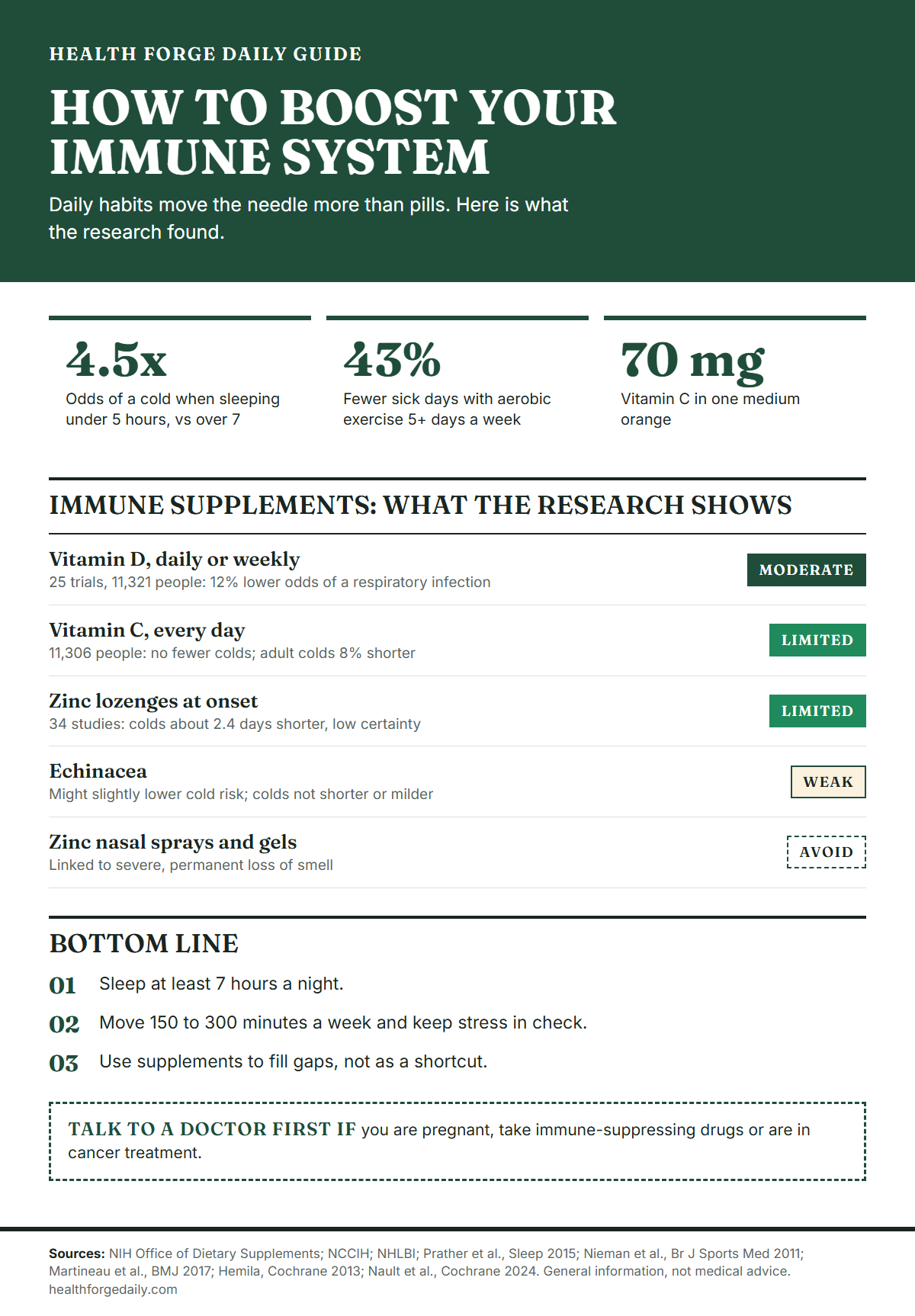
Yes, and sleep length has some of the clearest data of any habit. In a 2015 study, 164 healthy adults wore sleep trackers for a week and then received cold virus drops in the nose. Those who slept under 5 hours had 4.5 times the odds of a clinical cold compared with people who slept over 7 hours[10].
People sleeping 5 to 6 hours had similar risk, at 4.2 times the odds. Those sleeping 6 to 7 hours were not at clearly higher risk[10]. The link held after the researchers adjusted for age, season, body weight, stress and prior antibodies[10].
NHLBI advises adults to get 7 to 8 hours a day[11]. Lost sleep adds up across the week. If you lose 2 hours a night, you end up with a sleep debt of 14 hours by day seven[11].
If falling asleep is the problem, our guide on how to fall asleep fast with sleep research steps covers routines that help.
Does exercise or stress change how often you get sick?
Both do in the studies we read: active adults reported fewer sick days, and stressed adults caught more colds. These are associations, so they cannot prove cause. Still, the gaps are large, and both habits are cheap and low risk.
In a 2011 study, 1,002 adults aged 18 to 85 tracked cold symptoms for 12 weeks in fall and winter. Those doing aerobic exercise on 5 or more days a week had 43% fewer days with upper respiratory symptoms than mostly inactive people[12]. Symptoms were also 32% to 41% less severe[12].
Federal guidelines call for at least 150 to 300 minutes of moderate aerobic activity a week, plus muscle-strengthening work[13].
Stress mattered too. In a 1991 trial, 394 healthy adults were given respiratory viruses. Clinical colds rose from about 27% in the least stressed group to 47% in the most stressed[14]. Smoking, alcohol, diet and sleep did not explain the gap[14].
Do oranges boost your immune system?
Oranges supply vitamin C, a nutrient your immune system needs, but eating more of them will not lift immunity above normal. One medium orange has 70 mg of vitamin C, close to the 75 mg adult women need each day[2][1]. Men need 90 mg, and smokers need 35 mg more than nonsmokers[1].
Many foods carry as much or more, going by NIH figures for common servings[2]:
| Food | Serving | Vitamin C |
|---|---|---|
| Red pepper, raw | 1/2 cup | 95 mg[2] |
| Orange juice | 3/4 cup | 93 mg[2] |
| Orange | 1 medium | 70 mg[2] |
| Kiwifruit | 1 medium | 64 mg[2] |
| Green pepper, raw | 1/2 cup | 60 mg[2] |
| Broccoli, cooked | 1/2 cup | 51 mg[2] |
| Strawberries, sliced | 1/2 cup | 49 mg[2] |
An orange and half a cup of red pepper together give 165 mg, well over the daily target[2]. The adult upper limit from all sources is 2,000 mg a day[3].
Can supplements boost your immune system?
A few supplements have modest evidence for colds, but none has been shown to strengthen a healthy immune system. NIH says a varied diet usually gives you enough nutrients, and supplements help most when you are low[1]. Here is what the largest reviews we read found.
We grade each one in plain words. Moderate means several pooled trials with a small, consistent effect, and Limited means some trials that are small or of low quality. Weak means pilot data only or reviews that found no benefit, while Avoid means a safety problem outweighs any gain.
| Supplement | Evidence | Result | Grade |
|---|---|---|---|
| Vitamin D, daily or weekly | 25 trials, 11,321 people | Odds of a respiratory infection 12% lower overall, 70% lower in people who were very low[8] | Moderate |
| Vitamin C, taken every day | 29 comparisons, 11,306 people | No drop in colds for most people; colds 8% shorter in adults and 14% shorter in children[7] | Limited |
| Zinc lozenges at the first sign of a cold | 34 studies | Colds about 2.4 days shorter, low certainty, with more side effects such as nausea[9] | Limited |
| Echinacea | NIH summary of trials | Might slightly lower the risk of a cold, no shorter or milder colds[1] | Weak |
| Zinc nasal sprays or gels | NCCIH safety warning | Linked to severe, permanent loss of smell[6] | Avoid |
What about dosing, probiotics and elderberry?
Vitamin D helped most when taken daily or weekly, not as large single doses[8]. Vitamin C cut colds roughly in half only in people under heavy physical stress, such as marathon runners and soldiers in subarctic training[7]. Our deep dives on vitamin D benefits and how much you need and elderberry and zinc for colds cover dosing in detail.
NCCIH says there is not enough research to know whether probiotics prevent colds, and little is known about their long-term safety[6]. NIH notes elderberry does not seem to lower the risk of catching a cold, though some studies found it may ease symptoms[1]. Our review of whether probiotics work for gut health covers which strains have been studied.
How do you boost your immune system when sick?
Once a cold has started, rest and fluids are the base, and only a few products have shown a small effect on how long it lasts. Vitamin C started after symptoms began showed no consistent benefit in the Cochrane review[7]. Zinc lozenges have the most support for shortening a cold already underway[6][9].
NCCIH says oral zinc lozenges may shorten a cold when started within 24 hours of symptoms and taken for less than 2 weeks[6]. The 2024 Cochrane review found colds about 2.4 days shorter, but the certainty was low and side effects were more common[9].
For children over 1 year with a cough, buckwheat honey did better than placebo for cough and sleep in small studies. Never give honey to babies under 1 year, because of the risk of botulism[6].
Stay home while sick, cover coughs and sneezes, and wash your hands often so the germ does not spread to others[17]. See a clinician if you feel very ill or symptoms keep getting worse.
Who should be careful with immune supplements?
Anyone taking prescription medicine, anyone pregnant and anyone in cancer treatment should check with a clinician before taking immune supplements. Several common products interact with drugs, and more is not better. Each nutrient has a daily upper limit that counts food, drinks and supplements together[3][4][5].
| Nutrient | Adult need | Upper limit |
|---|---|---|
| Vitamin C | 75 to 120 mg[1] | 2,000 mg[3] |
| Vitamin D | 600 to 800 IU[1] | 4,000 IU[4] |
| Zinc | 8 to 12 mg[1] | 40 mg[5] |
- Immune-suppressing drugs: echinacea and elderberry might make these medicines work less well[1]. If you take methotrexate or a transplant drug, ask your prescriber first.
- Cancer treatment: vitamin C supplements might interact with chemotherapy and radiation[3].
- Antibiotics: zinc can interfere with quinolone and tetracycline antibiotics[5].
- Pregnancy: scientists do not know if echinacea or elderberry is safe during pregnancy[1].
- Vitamin D and other drugs: it might interact with orlistat, statins, thiazide diuretics and steroids[1].
What do doctors recommend first?
Doctors start with vaccines, basic hygiene and the daily habits above, well before supplements. Vaccines teach the immune system to recognize and fight specific germs, including the viruses behind flu and COVID-19[16]. Handwashing for at least 20 seconds is a simple way to stop germs from spreading[17].
A clinician may also test for a real deficiency. NIH notes that if your diet falls short in key vitamins and minerals, your immune system will not work as well, and you may get more infections[1]. In that case a targeted supplement makes sense.
People in cancer treatment need extra care. NCI lists a fever of 100.5°F (38°C) or higher, chills and a new cough as signs of infection. Infections during treatment can be life threatening and need urgent care, so call your care team right away[18].
Practical immune checklist
- Check that your vaccines are up to date with your clinician[16].
- Set a bedtime that allows at least 7 hours of sleep[10][11].
- Plan 150 minutes or more of brisk activity each week[13].
- Eat at least one vitamin C food, such as an orange or red pepper, each day[2].
- Read supplement labels and keep totals under the upper limits[3][4][5].
- Throw out any zinc nasal spray or gel[6].
- Keep drinking light, since heavy drinking slows recovery from infection[15].
Browse more guides in our immune support section.
Bottom line
The steps with the best support are sleep of 7 hours or more, regular exercise, lower stress, vaccines and clean hands[10][12][14][16][17]. Supplements play a small part. Vitamin D has the strongest data, mostly for people who are low[8].
For most people, fixing short sleep is a better first step than buying an immune supplement, because the cold risk gap in the sleep study was far larger than any effect seen for vitamin C, D or zinc[10][7][8][9]. If you are pregnant, take daily medicine or are in cancer treatment, talk with your clinician before adding anything.
Sources
- Dietary Supplements for Immune Function and Infectious Diseases. NIH Office of Dietary Supplements, 2025
- Vitamin C: Fact Sheet for Health Professionals. NIH Office of Dietary Supplements
- Vitamin C: Fact Sheet for Consumers. NIH Office of Dietary Supplements
- Vitamin D: Fact Sheet for Consumers. NIH Office of Dietary Supplements
- Zinc: Fact Sheet for Consumers. NIH Office of Dietary Supplements
- The Common Cold and Complementary Health Approaches: What the Science Says. NCCIH, NIH
- Vitamin C for preventing and treating the common cold (Hemila and Chalker). Cochrane Database of Systematic Reviews, 2013
- Vitamin D supplementation to prevent acute respiratory tract infections (Martineau et al.). BMJ, 2017
- Zinc for prevention and treatment of the common cold (Nault et al.). Cochrane Database of Systematic Reviews, 2024
- Behaviorally Assessed Sleep and Susceptibility to the Common Cold (Prather et al.). Sleep, 2015
- How Much Sleep Is Enough?. NHLBI, NIH
- Upper respiratory tract infection is reduced in physically fit and active adults (Nieman et al.). British Journal of Sports Medicine, 2011
- Top 10 Things to Know About the Physical Activity Guidelines. Office of Disease Prevention and Health Promotion, HHS
- Psychological stress and susceptibility to the common cold (Cohen et al.). New England Journal of Medicine, 1991
- Alcohol and the Immune System (Sarkar et al.). Alcohol Research: Current Reviews, 2015
- Vaccines. MedlinePlus, National Library of Medicine
- Germs and Hygiene. MedlinePlus, National Library of Medicine
- Infection and Neutropenia during Cancer Treatment. National Cancer Institute
Frequently asked questions
How can I boost my immune system fast?
There is no fast switch. Sleep is the quickest habit to fix: in one study, people sleeping under 6 hours had over 4 times the odds of a cold. Keep vaccines current too, so protection is in place before cold and flu season.
How do you boost immune system for kids?
Kids need the same basics: enough sleep, active play, fruits and vegetables, routine vaccines and handwashing. In the Cochrane review, daily vitamin C shortened colds in children by 14%. Ask a pediatrician before giving any supplement.
Can I boost my immune system while pregnant?
Focus on sleep, food, handwashing and the vaccines your obstetrician recommends. Scientists do not know if echinacea or elderberry is safe in pregnancy, and vitamin D tops out at 4,000 IU a day. Check every supplement with your clinician.
How can I boost my immune system during chemo?
Follow your cancer team's advice first. Vitamin C supplements might interact with chemotherapy and radiation. Wash hands often, and call your team right away for a fever of 100.5 degrees F or higher, chills or a new cough.
How do I boost my immune system before travel?
Ask your clinician about travel vaccines well before you leave. Protect your sleep on the trip, carry hand sanitizer for times without soap, and keep alcohol low. Zinc lozenges are an option if a cold starts, but skip zinc nasal sprays.

Grace Whitaker is the health editor at Health Forge Daily. She reads supplement labels line by line, checks each ingredient and dose against published research, and tracks refund policies and customer complaints before a product gets a verdict. She is not a doctor, so every review points readers back to their own physician for medical decisions.
This article is for general information and is not medical advice. Supplements are not evaluated by the FDA and are not intended to diagnose, treat, cure or prevent any disease. Check with your doctor before you start any supplement.